





What a seasoned industry consultant says operators get wrong — and how to fix it.
Ask any experienced restaurateur what they wish they’d known before their first big opening, and there’s a good chance smallwares will come up. Not the kitchen equipment or POS system; it’s the ladles, cutting boards, and thermometers — the unsexy stuff that actually keeps a kitchen running.
Todd Rae has spent his career in and around the hospitality industry — working in account management, consulting on new openings, and partnering with operators across Canada through United Trimen. He’s seen the same mistakes repeated over and over: operators who overspend on lighting and decor, then scale back the smallwares package and wonder why they’re running out of plates by 7 PM on a Friday.
“The most critical item on an opening order is always the one that’s missing,” Todd says. His advice is simple: budget properly for smallwares, think long-term value over upfront cost, and never stop being open to new products that can make your kitchen safer and more efficient.
Here’s Todd’s definitive list of the top 10 smallwares no high-volume kitchen should open without.
1. Stemware Glass Racks
The most overlooked item on almost every opening order.
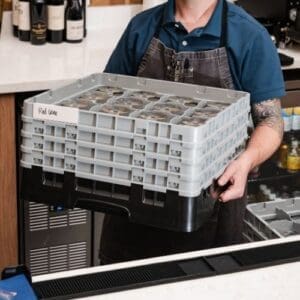
Todd’s number one call-out is also the one that gets cut from budgets most often: proper glass racks for stemware. “You absolutely need stemware racks to wash stemware properly,” he explains. “Without them, you’re rushing fragile glasses through a system that wasn’t designed for them, and you’re paying for it in breakage every single week.”
These are serious investments. Protecting them with the right racking system isn’t a nice-to-have — it’s a necessity that pays for itself fast.
Pro tip: Breakage in high-volume kitchens almost always traces back to insufficient inventory. When you don’t have enough glasses in circulation, staff rush products through the cleaning system, and that’s when things shatter. Order more than you think you need, and rack them properly.
2. Hotel and Insert Pans with Proper Lids
The workhorse of every prep and service line.
Insert pans are in constant use in any commercial kitchen. But Todd’s emphasis isn’t just on the pans themselves; it’s on having the right depth and the right lid technology. “New snap-on and seal lids have changed the game,” he says. “They protect product, keep things organized, and make the transition from prep to service clean and efficient.”
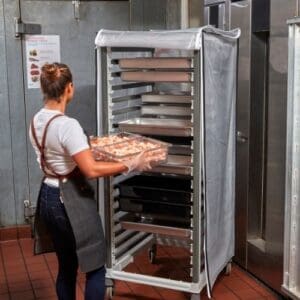
Capacity matters. A ¼-size pan has a very different role than a full-size. Don’t let cost pressure push you into the wrong configuration — it creates workflow headaches every service.
3. Digital Portion Scales
The most underrated profitability tool in your kitchen.
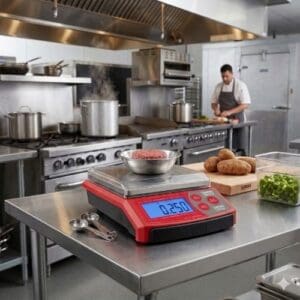
Portion control is about profitability and consistency, and Todd says digital scales are the most underrated tool operators overlook. “A ladle or a disher tells you the portion if someone fills it to the top. A scale tells you the truth no matter what.”
The logic is simple: protein portions, cheese, toppings — the items that carry significant food cost — need to be weighed, not eyeballed. Across hundreds of covers a week, even half an ounce of over-portioning per plate adds up to a meaningful hit on your margins. A digital scale standardizes that and gives your team a clear, objective reference.
4. Colour-Coded Cutting Boards
A visual food safety system your whole team can follow without thinking.
Colour-coded cutting boards aren’t just a regulatory checkbox, they’re a practical system that reduces cross-contamination risk without relying on staff to remember verbal instructions. Red for raw beef, yellow for poultry, green for fruits and vegetables, white for dairy and bread, blue for fish. When the system is visual, compliance is easy.
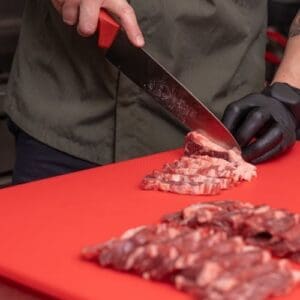
Todd recommends fresh boards specifically — not boards that have been deeply scored over years of use, where bacteria can hide in the grooves. “Replace them regularly, especially in high-volume environments,” he says. “And make sure you have enough for every station that needs one.” For kitchens serving guests with food allergies, colour-coded boards are especially critical. They become part of your allergen management protocol, and inspectors take notice.
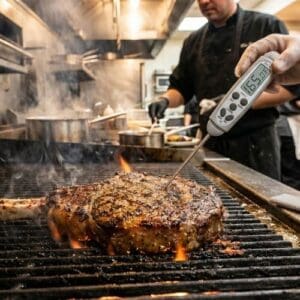
5. Probe and Infrared Thermometers
Every staff member. Every shift. No exceptions.
Food temperature documentation isn’t optional; it’s what stands between you and a serious health incident.
Todd’s standard: every staff member should have access to both a probe thermometer and an infrared thermometer, and temperatures should be documented every service.
6. Ladles and Dishers
Consistency starts with the right scoop.
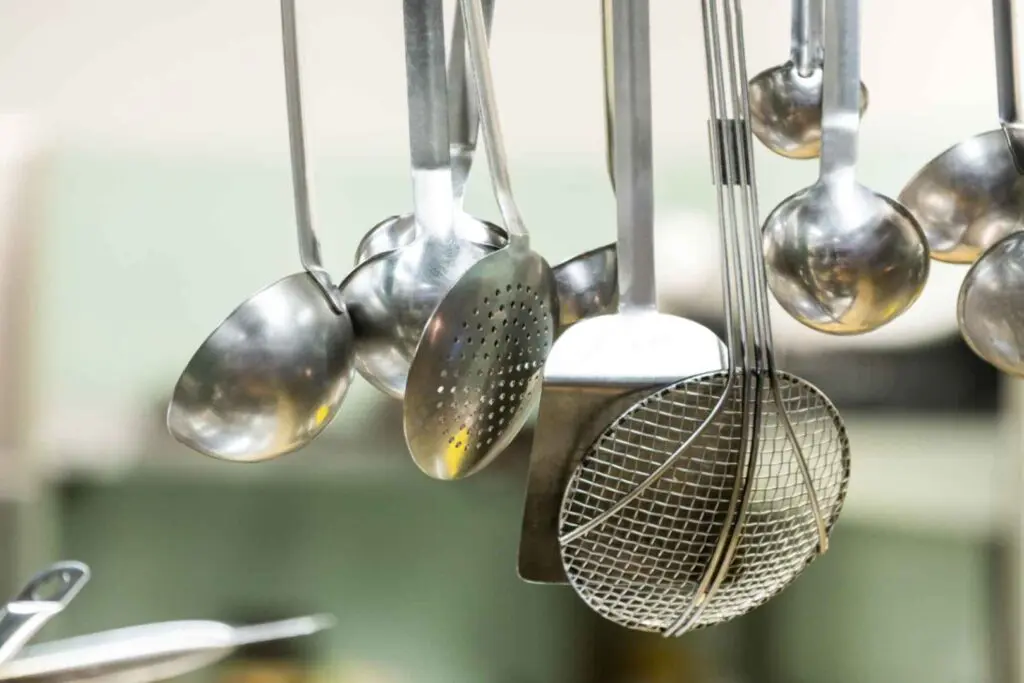
Every portion on every plate should look and weigh the same. Ladles and dishers are how you get there at speed during a busy service. The key is having the right size for each application and using colour-coding to make sure the right tool goes to the right station. (Vollrath’s line is a standout here.) The colour-coding system means your staff always grabs the right size, even on a slammed Saturday night.

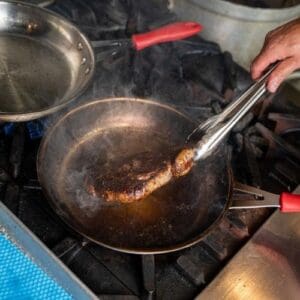
7. Quality Stainless Steel Cookware
Know when to buy heavy-duty and when to buy replaceable.
Not all cookware buying decisions are the same — and Todd is clear that operators need to adjust their mindset based on what they’re buying. For pans that are likely to go missing or get heavily abused in a casual kitchen setting, a mid-range option that you can replace easily might be the smarter choice. For pans that live on the line and cook thousands of orders, heavy-duty construction pays off over time.
8. The Right Knives and a Sharpener
A dull knife is a dangerous knife.
“The right knife” sounds obvious, but Todd’s point is more nuanced: the right knife depends on the user’s skill, the kitchen’s menu, and the operation’s ability to maintain those knives. The most expensive blade in the world is a liability if it’s sitting dull in a knife block.
Whatever you choose, Todd’s consistent advice is to invest in a knife sharpener for on-site use. “Most casual restaurants should have their own sharpener,” he says.

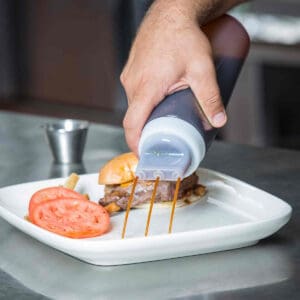
9. Dated Squeeze Bottles and Bar Measuring Tools
Small tools, big impact on food safety and beverage consistency.
Squeeze bottles that can be clearly labeled with contents and dates are a simple but powerful food safety tool — especially for sauces, mixes, dressings, and anything with a defined shelf life. Todd flagged these as part of a standardized food safety toolkit that every kitchen should have without exception.
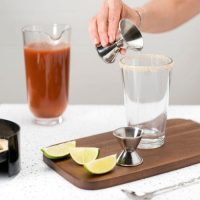
On the bar side, measured pourers and jiggers are essential for consistency and cost control. Cocktails that aren’t measured are cocktails that cost more and taste different every time. For wine service, tools that remove air from open bottles, like vacuum stoppers, protect product and reduce waste.

10. Aprons and Cleaning Rags
What your team looks like is what guests think of your kitchen.
It’s easy to underfund apparel and textiles because they feel like a soft cost, but Todd frames it differently: “A messy apron is a window into the operation behind the kitchen door.” Guests see your front-of-house and back-of-house staff. Their appearance communicates standards, attention to detail, and professionalism.
Cleaning rags, wipes, and aprons are among the most frequently replaced items in any restaurant. They’re also among the most frequently under-budgeted at opening.
The replacement frequency of these items is real, so build it into your operational budget from day one, not as an afterthought. Todd’s broader point applies here too: look past the better deal and assess where the actual value lies for your dollar. Guests notice.
The Bottom Line: Budget for Smallwares
Todd’s single biggest piece of advice for operators is this: don’t let smallwares be the line item you cut to fund the fancy light fixtures. It’s a mistake that ripples through every service, right from the day you open. The plates you’re short, the thermometers you don’t have, the racks that didn’t make it into the budget — you feel those gaps constantly.
He also encourages operators to keep an open mind to new products. The foodservice industry keeps innovating. Seeking out improvements and a safer workplace always pays off.
United Trimen’s team of specialists is ready to help you build the right smallwares package for your operation — whether you’re opening your first restaurant or auditing an existing kitchen.
Contact us at sales@unitedtrimen.com or call 800-461-0000.